We may earn a commission from purchases through links in this article, at no extra cost to you. How we earn
Laser Safety & Editorial Methodology
Diode laser systems operating around the 450 nm wavelength emit visible radiation capable of causing permanent ocular damage and producing airborne particulates. Please note that this guide compares marketplace listing titles and seller claims without physical testing; no hands-on testing was performed on any of the referenced machines. Always verify certified optical density (OD4+ at 450 nm) for any protective eyewear or built-in filter windows, and maintain an active exhaust setup prior to powering on any unit.
Desktop diode laser engravers featuring roughly 5 watts of optical power offer a focused balance between small footprints, low energy draw, and dedicated surface-finishing capability. They appeal strongly to makers interested in marking wooden gifts, personalizing leather patches, or etching decorative patterns into craft veneers. However, purchasing through open marketplace listings requires close scrutiny: product descriptions frequently conflate total electrical power consumption with actual laser beam output, while chassis designs vary widely in safety enclosure and mechanical stability.
The 5W Optical Reality: Material Capabilities and Limitations
Understanding what a 5W diode can realistically accomplish is essential before selecting a model. A true 5-watt optical blue beam (typically 450 nm) concentrates adequate energy to mark dark woods, engrave vector text into basswood sheets, and produce detailed burns on vegetable-tanned leather.
Cutting is where performance boundaries appear. Although product titles routinely mention cutting, separating solid timber or dense plywood thicker than 2 mm to 3 mm usually necessitates slow feed rates and multiple consecutive passes. Without continuous pressurized air assist, repeated passes along the same kerf line can cause excessive scorching, edge charring, and significant smoke buildup. Makers who plan to cut thick plywood shapes or assemble structural joinery will be better served by higher-output 10W or 20W optical systems. A 5W setup remains best matched to surface scoring, dark branding, and shallow relief graphics.
Catalog Comparison: Listed Diode Units
The three models below represent different hardware styles claimed in current marketplace listings, ranging from self-contained desktop boxes to mobile folding gantries. Pricing reflects baseline USD listings gathered from marketplace data and may shift with seller coupons, local taxes, or bundle selections.
| Model | Catalog Role | Reported Diode Power | Form Factor | Listed Price | Customer Feedback |
|---|---|---|---|---|---|
| Algolaser PIXI | Primary Contender | Claimed 3W / 5W / 10W options in title | Enclosed portable mini chassis (claimed) | ~$284.24 USD | 97.8% positive (10 reviews) |
| Wainlux Z3 | Primary Contender | 5W Diode module (claimed) | Foldable portable gantry with autofocus (claimed) | ~$607.44 USD | Unrated score (1 review) |
| P1 5W | Supporting Specialty | 5W Diode module (claimed) | Enclosed portable desktop for stone and rubber (claimed) | ~$719.63 USD | Unrated score (0 reviews) |
Detailed Analysis: Primary Desktop Engravers
Algolaser PIXI: Enclosed Budget Desktop for Home Crafters
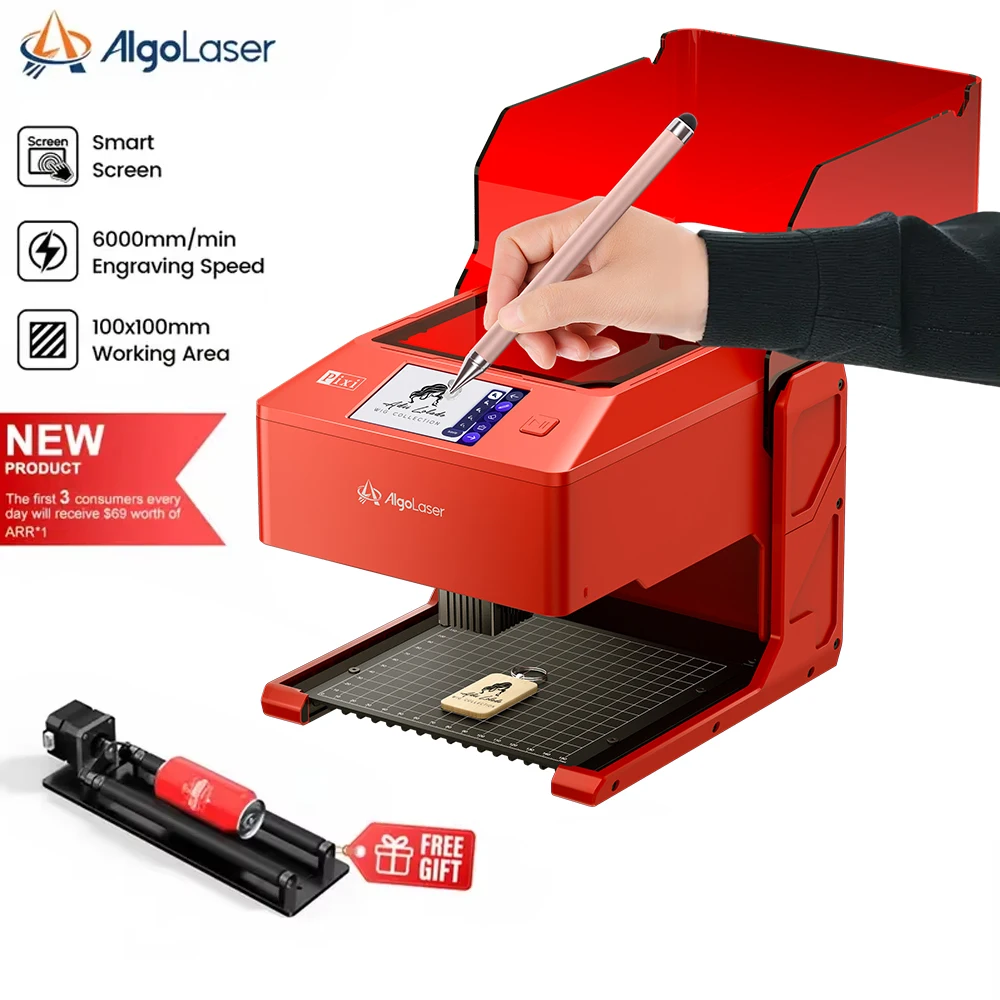
Target Audience & Ideal Use Case: The Algolaser PIXI title claims an enclosed, portable mini format, positioning it toward hobbyists and small craft creators who want a self-contained desktop unit for light personalization tasks like wooden tags, coasters, or leather patches. For shared living spaces where open gantries risk stray beam reflections, an enclosed form factor is appealing, though buyers should verify the actual enclosure safety rating directly on the listing.
Key Strengths: Priced at roughly $284.24 USD with a 97.8% positive feedback score across 10 reviews, it represents an accessible entry point based on catalog pricing. The seller title advertises an enclosed, portable mini design, which may help contain stray light and fumes compared to fully open frames.
Meaningful Drawbacks & Cautions: A major challenge with the PIXI listing is SKU ambiguity: the title clusters "3W 5W 10W Diode" together under one catalog entry. Prospective purchasers must double-check the vendor dropdown options during checkout to confirm which wattage tier is selected. Furthermore, because the listing includes no product description, critical operational details are missing. Before ordering, buyers should check the listing or ask the seller: What are the exact cutting ability and maximum material thickness limits? What is the verified optical output power versus electrical consumption? What connectivity options (such as USB, Wi-Fi, or app control) and software firmware are supported? What maintenance routine is required for the optical lens, and does the enclosure carry a certified laser safety rating with an active exhaust port?
Wainlux Z3: Foldable Portability for Mobile Vendors
Target Audience & Ideal Use Case: The Wainlux Z3 title advertises a foldable mini laser with autofocus, marketing it toward mobile crafters, market vendors, or hobbyists with limited desk space who want a collapsible tool. The title claims compatibility with leather, wood cutting, stone, stainless steel, and glass.
Key Strengths: Priced at approximately $607.44 USD, the Z3 highlights mechanical portability and autofocus functionality in its title. If the advertised autofocus mechanism works as claimed, it would eliminate manual focal-spacer adjustments when switching between materials of varying heights.
Meaningful Drawbacks & Cautions: The higher asking price is paired with minimal feedback data, showing just one recorded customer review and an unrated score. In addition, buyers should treat title claims of marking bare glass or stainless steel cautiously, as standard 5W 450 nm diodes cannot typically alter reflective metals or transparent glass without specialized marking sprays or surface coatings. Because the listing lacks a detailed product description, buyers should verify essential parameters directly with the seller: What are the verified cutting ability and material thickness limits on craft wood? What is the measured optical beam output? What data connectivity and software controllers are supported? How does the folding mechanism hold alignment over time, what maintenance is needed, and what safety class or eye protection is included?

Supporting Specialty Unit: P1 5W Enclosed Engraver
P1 5W: Self-Contained Desktop for Specialty Substrates
Target Audience & Ideal Use Case: The P1 5W title advertises an enclosed mini desktop machine for stone and rubber engraving, aimed at specialty crafters interested in small relief carvings or stamp making. Its claimed enclosed design suggests an attempt to contain dust and odor during processing.
Key Strengths: The listing highlights an enclosed desktop form factor for niche substrates like stone and rubber, offering a contained footprint for hobby spaces.
Meaningful Drawbacks & Cautions: At approximately $719.63 USD with zero customer reviews or rating history, this listing poses high purchasing uncertainty. For woodcrafting specifically, the steep price offers less documented value than models with established feedback. Because the listing provides no description, prospective buyers should contact the seller to clarify missing specifications: What is the measured optical laser output power? What are the actual cutting ability and material thickness capabilities? What connectivity protocols, control software, and firmware are used? What maintenance does the enclosed chassis require, and what certified safety class or ventilation exhaust ports are provided?
Pre-Purchase Verification Checklist for Woodcrafters
When comparing product listings for 5-watt diode machines, review these essential mechanical and electrical points to avoid mismatched expectations:
- Optical Beam Output vs. Electrical Power: Check whether the listing explicitly confirms true optical laser power rather than total electrical power consumption.
- Controller and Firmware Protocol: Check if the unit supports standard open firmware and software (such as LightBurn or LaserGRBL) versus proprietary apps that restrict workflow.
- Bed Area and Enclosure Dimensions: Ask the seller for verified workspace travel boundaries and interior clearance before assuming larger blanks will fit.
- Exhaust and Safety Filtration: Because wood scoring produces smoke and particulate matter, verify whether the enclosure provides an active exhaust fan, duct port, or certified laser-safe viewing window.